

The inspiration for this piece came after visiting the Buddhist Temple located within the Seabrook Farms community. This experience highlighted my limited understanding of the immigration stories from the World War II era, particularly those involving Japanese Americans.
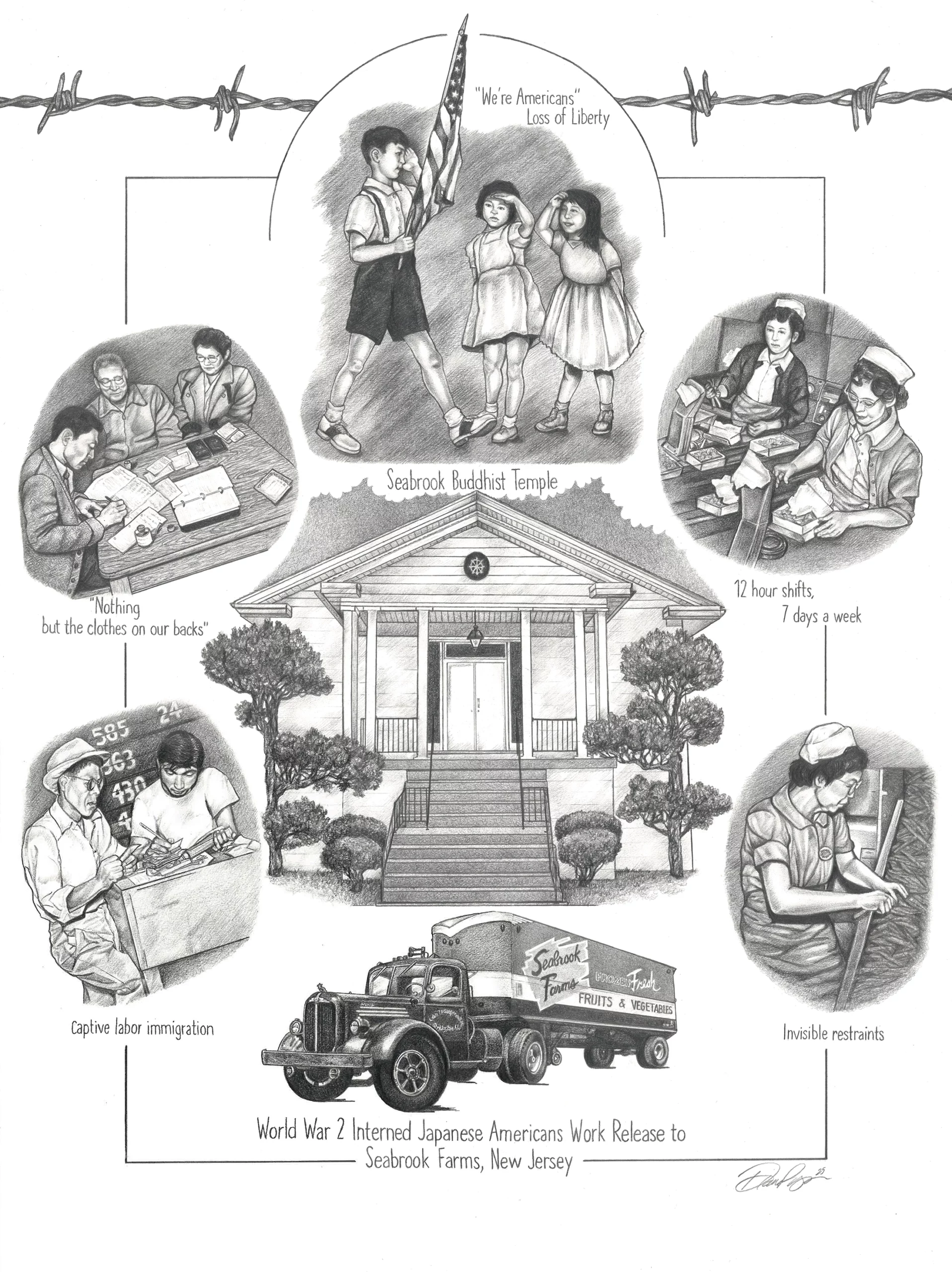
Graphite on paper (18x24in)
Background and Inspiration
During a presentation I attended at the temple, family members of “relocated” Japanese Americans shared their experiences. Many of these families included children who grew up within chain-linked fenced camps. These children experienced childhood innocence, largely unaware of the gravity of their circumstances. Despite being American citizens, they were subjected to work release at Seabrook Farms, though their freedom remained restricted. They lived under confinement, worked twelve-hour shifts, and faced significant limitations on their ability to leave the property.
Artistic Choices and Symbolism
For this illustration, I chose to make the current Buddhist Temple the focal point. The temple symbolizes the enduring heritage and community spirit that helped these families persevere despite the harsh treatment inflicted by their own country. Surrounding the temple, I included vignettes—snapshots in time based on photo references—depicting workers, children unaware of their limitations, and scenes from Seabrook Farms. These visual elements serve to make the illustration’s narrative clear and accessible. The presence of barbed wire in the illustration is a direct reference to the imprisonment endured by Japanese Americans during this period.
Reflections
Through this artistic process, I gained a much deeper understanding of the unjust and severe treatment directed toward a people of beautiful culture. Many of those affected were forced to begin their lives anew, not just once, but multiple times as they moved in and out of internment locations.