

Women’s March on Versailles
This painting reimagines the Women’s March on Versailles (1789) within a modern warehouse, centering the strength of immigrant women laborers. A group of workers gathers in solidarity, their orange shirts evoking both visibility and unity. The central figure holds a document marked PL 2023 Chapter 10, referencing New Jersey’s law protecting temporary workers’ rights. Name tags link three women to historic Latina labor activists, bridging past and present struggles. Surrounding shelves bear corporate packages, a reminder of the industries dependent on precarious labor. With brooms and mops raised as symbols of resistance, the women stand poised for collective action.
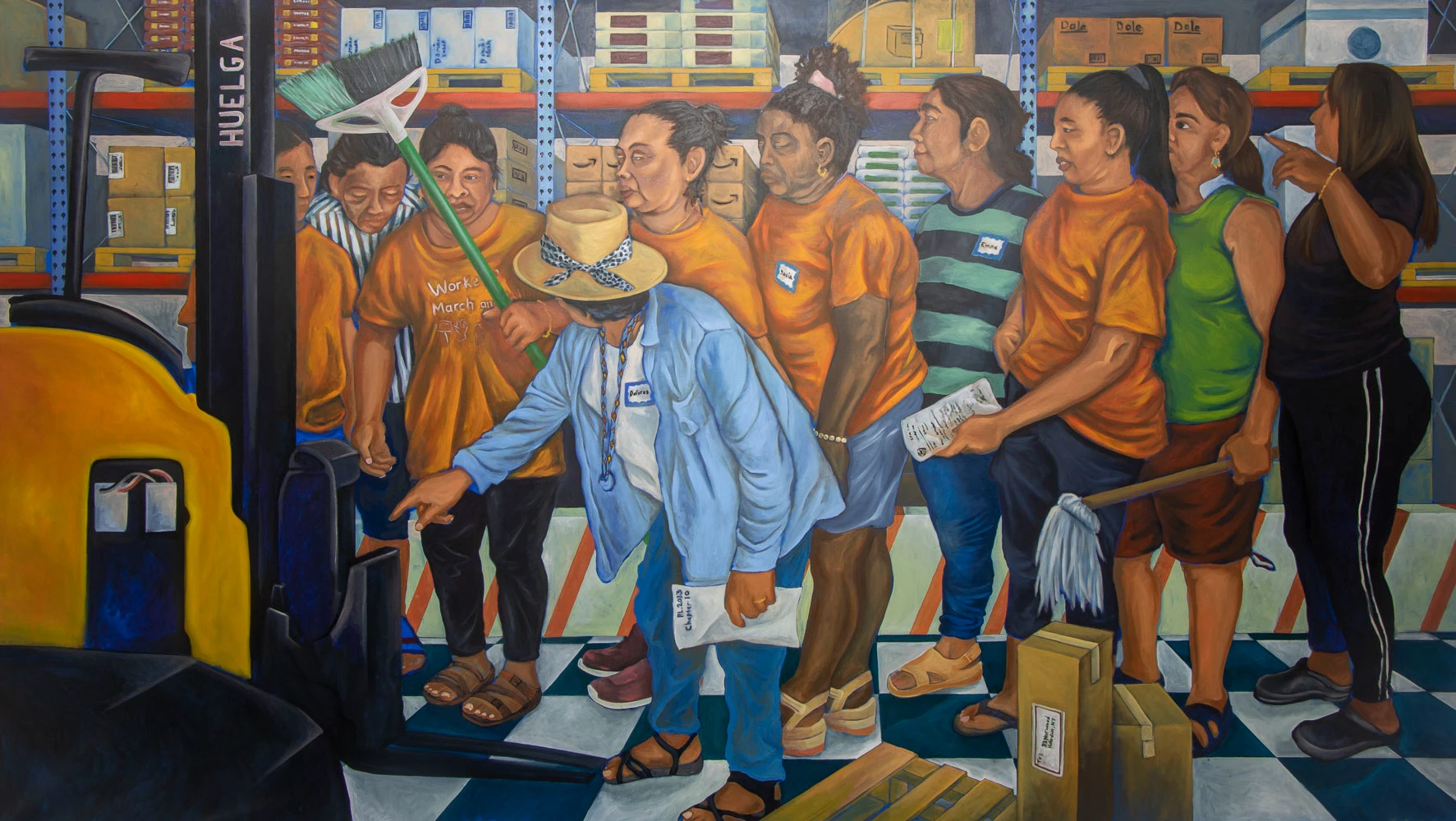
Oil on canvas, 67 x 114 in (170 x 290 cm)
Politics of Policing Policy
This painting revisits the confrontations between Bostonians and the 29th Regiment of Foot that culminated in the Boston Massacre. Drawing parallels across history, the work references the Pullman Strike of 1894, the Kent State shootings of 1970, and the 1992 Los Angeles Riots—each marking moments when state power was turned against the public. The composition extends this lineage to the present, reflecting on the current administration’s January 2025 directive removing restrictions on immigration enforcement.
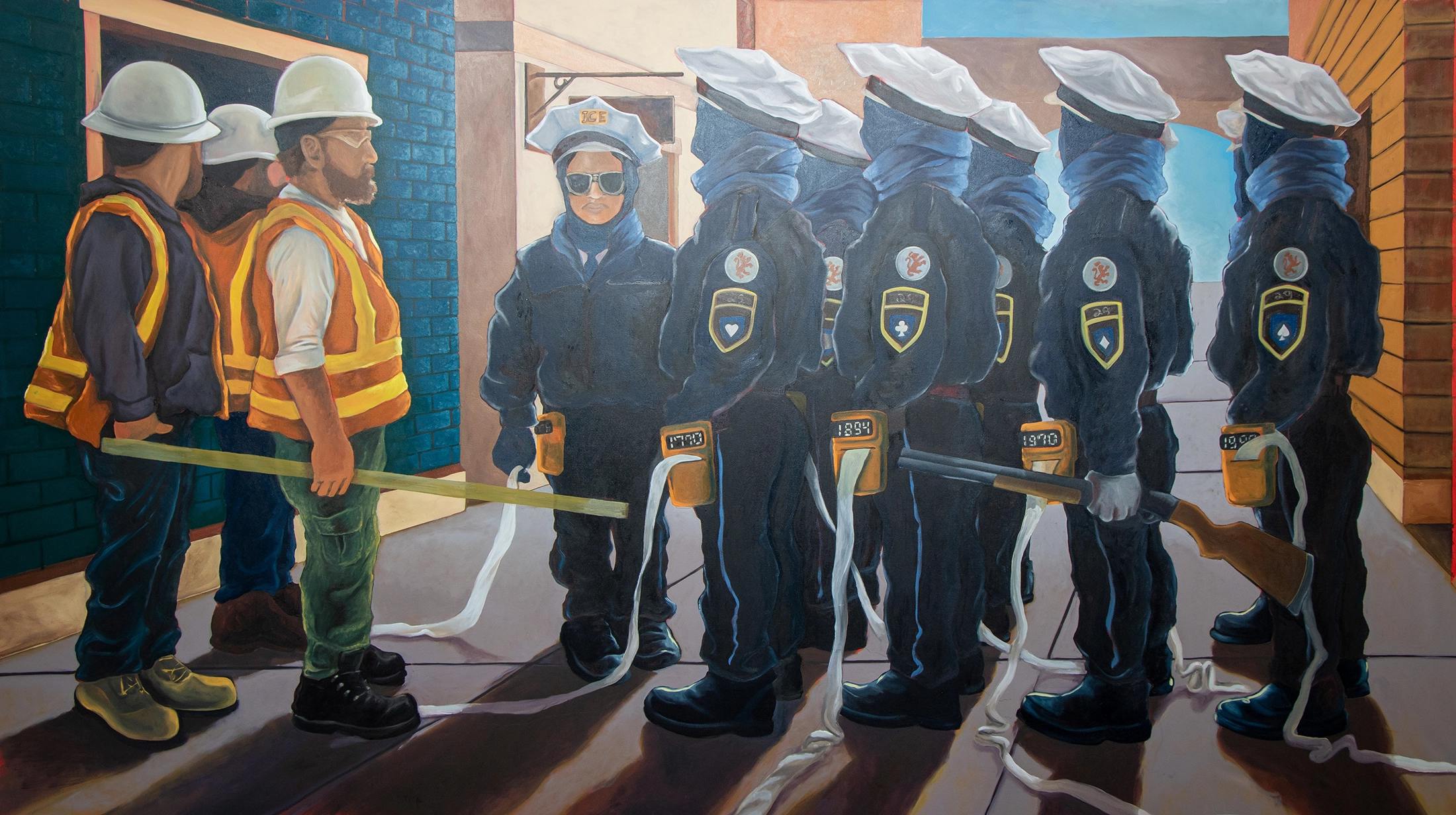
Oil on canvas, 67 x 114 in (170 x 290 cm)
Death of A General Laborer
Based on Rafael Sanchez, a 65-year-old undocumented temporary worker in New Jersey. In an interview with NJ.com, Sanchez is shown living alone in an unheated garage, padding the walls with layers of old clothing to survive the winter. His precarious existence stands in deliberate contrast to Benjamin West’s The Death of General Wolfe. This romantic painting immortalizes a fallen general surrounded by attendants, glory, and national symbolism. By reframing that historical composition through the lens of an overlooked laborer, this painting interrogates who is granted dignity and who becomes a subject of public memory.
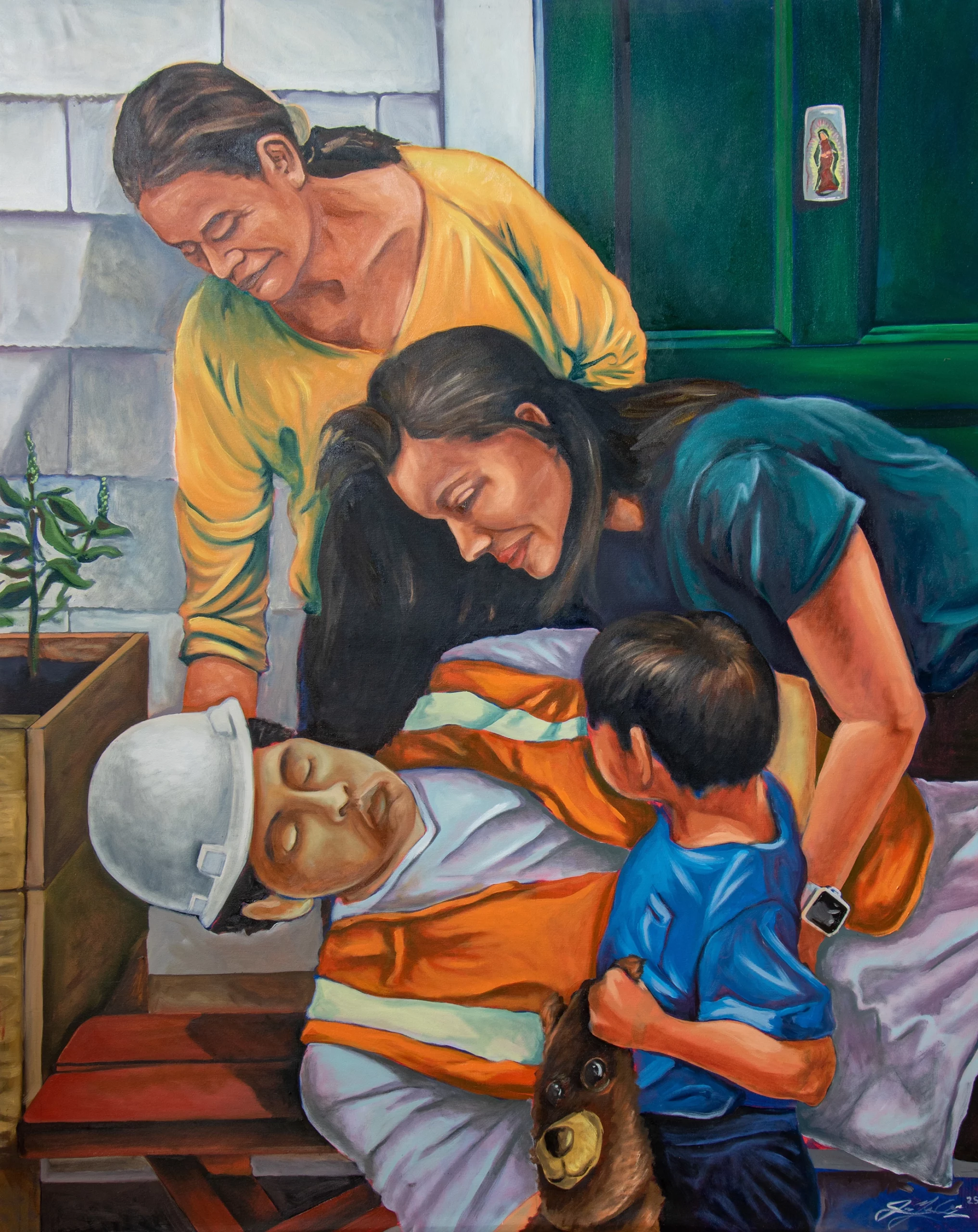
Oil on canvas, 60 x 44 in (152 x 112 cm)
Los Sueños de mi Hijos
Drawn from the community dialogues hosted by CoLab Arts in New Brunswick, the painting centers on a recurring motivation voiced by immigrants: migration undertaken for the future of their children. A group of women holds a Día de los Muertos blanket brought from a participant’s home country, a symbol of continuity and remembrance. Before them, a young boy stands holding a candle, flanked by two construction workers turned away from the viewer and facing him.
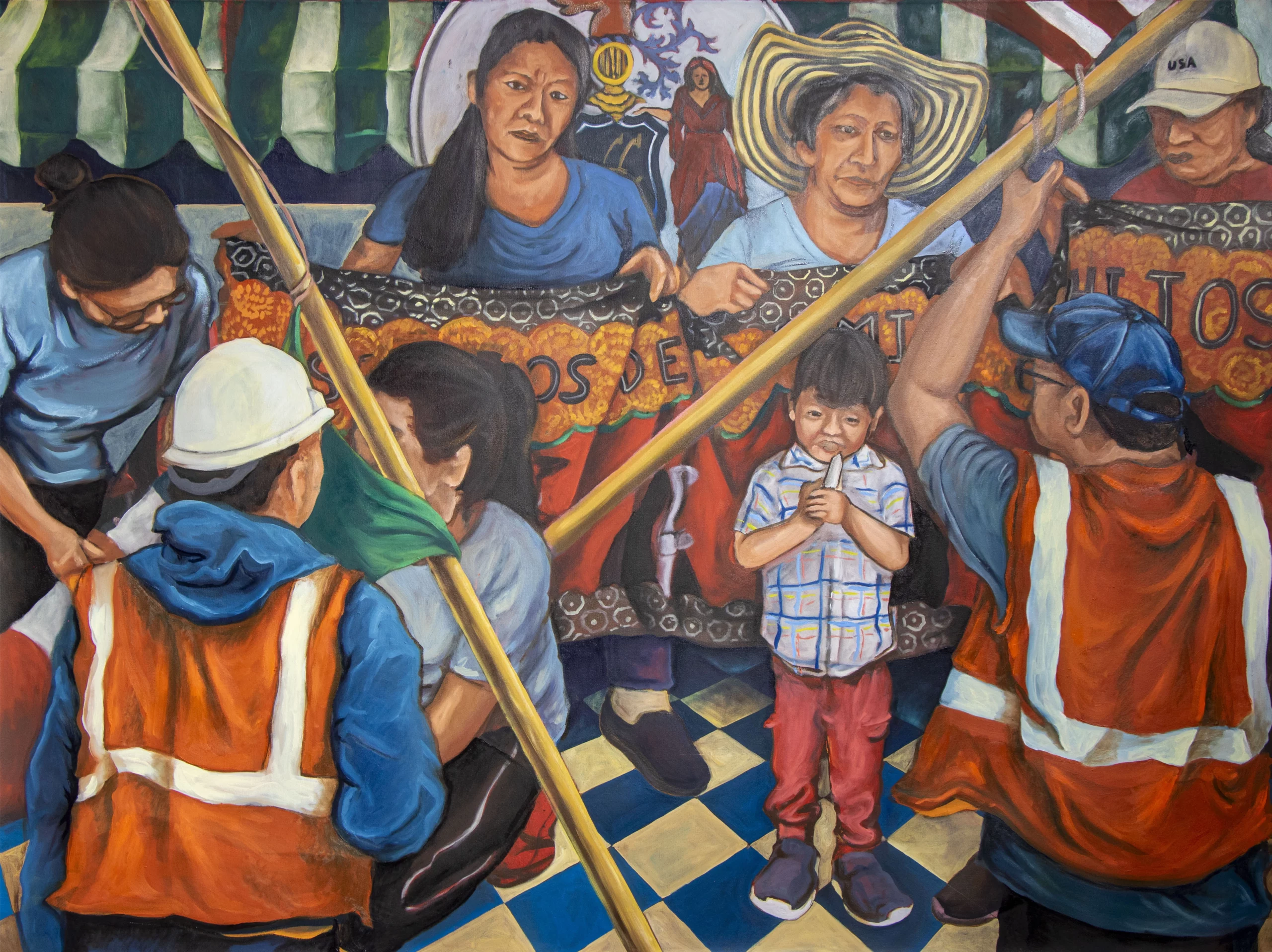
Oil on canvas, 44 x 60 in (152 x 112 cm)
The Labors of a Sabine
Drawing from the Abduction of the Sabine Women, The Labors of a Sabine collapses antiquity into the present to consider how nations are formed through coercion and how labor exploitation is often gendered. During my time working with the New Jersey Monuments to Migration and Labor (NJ MML), a series of community dialogues revealed recurring accounts of physical and sexual exploitation experienced by temporary workers, many of them undocumented women. These testimonies inform the painting’s parable-like structure, connecting an ancient founding myth to contemporary systems in which vulnerable laborers are incorporated into economic life under conditions of imbalance and coercion.
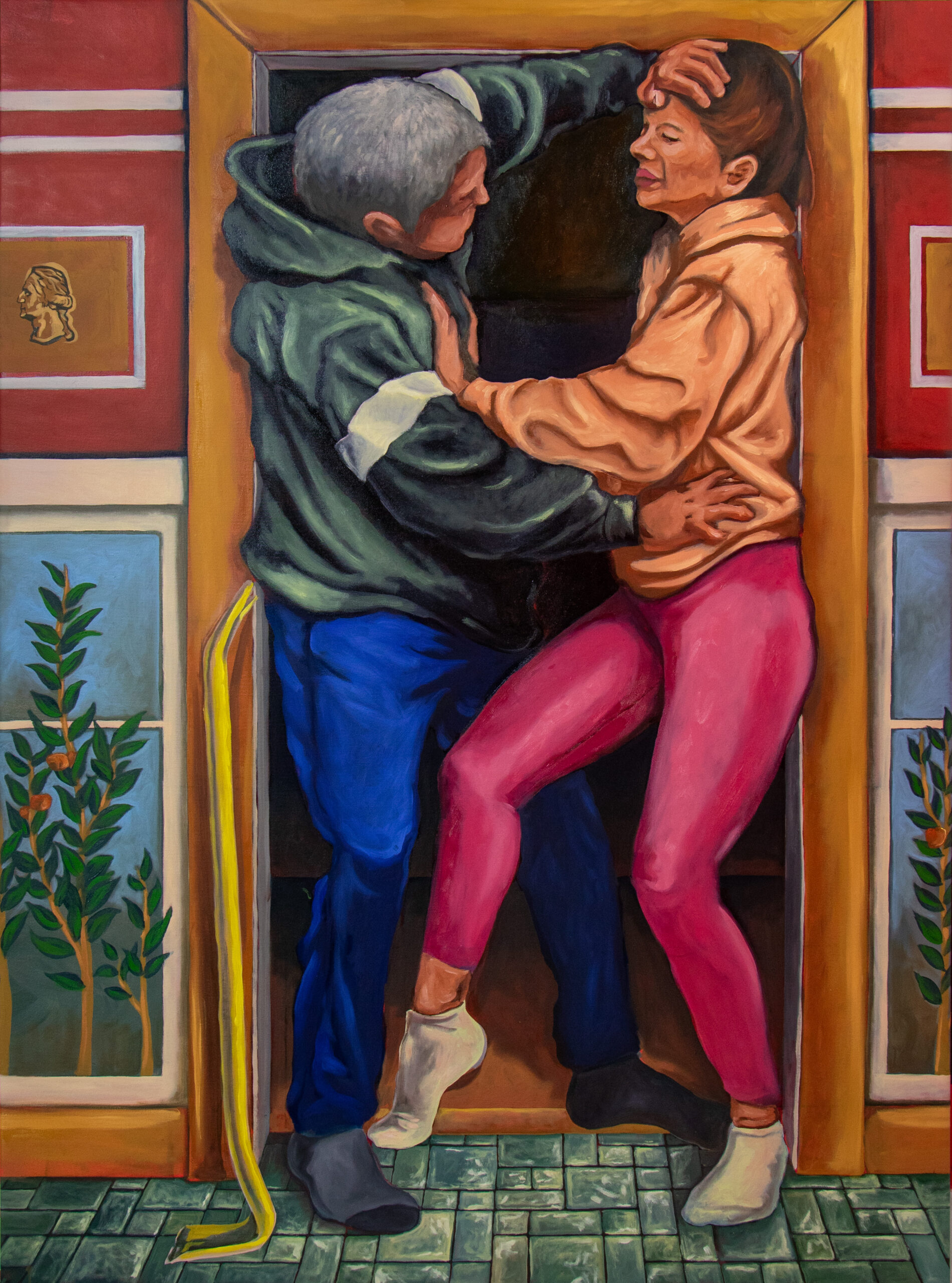
Oil on canvas, 60 x 44 in (112 x 152 cm)