Flagship
“What if a monument is not a stationary object, but art that travels?”
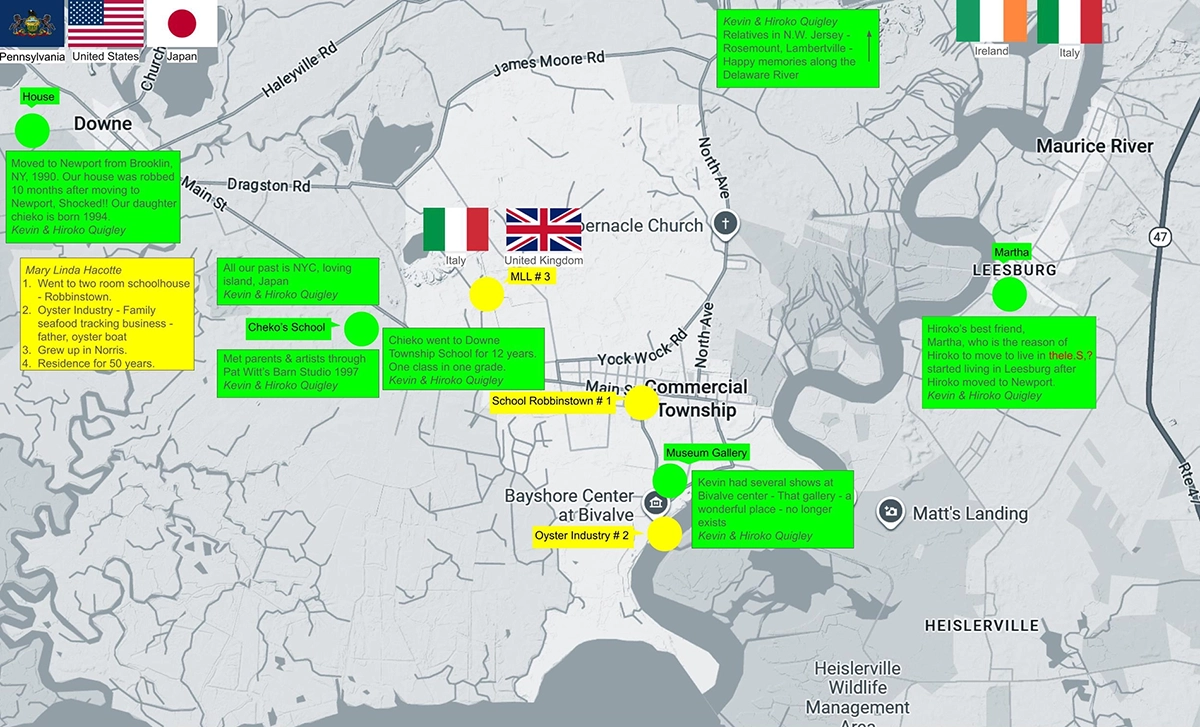
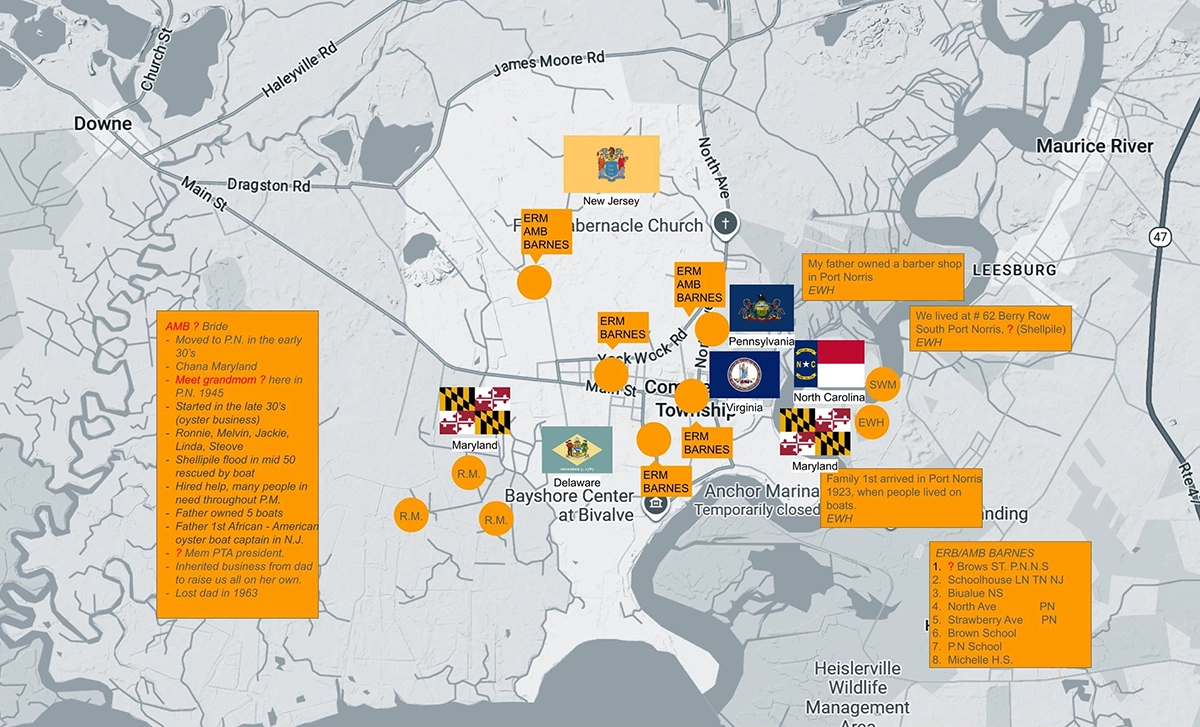
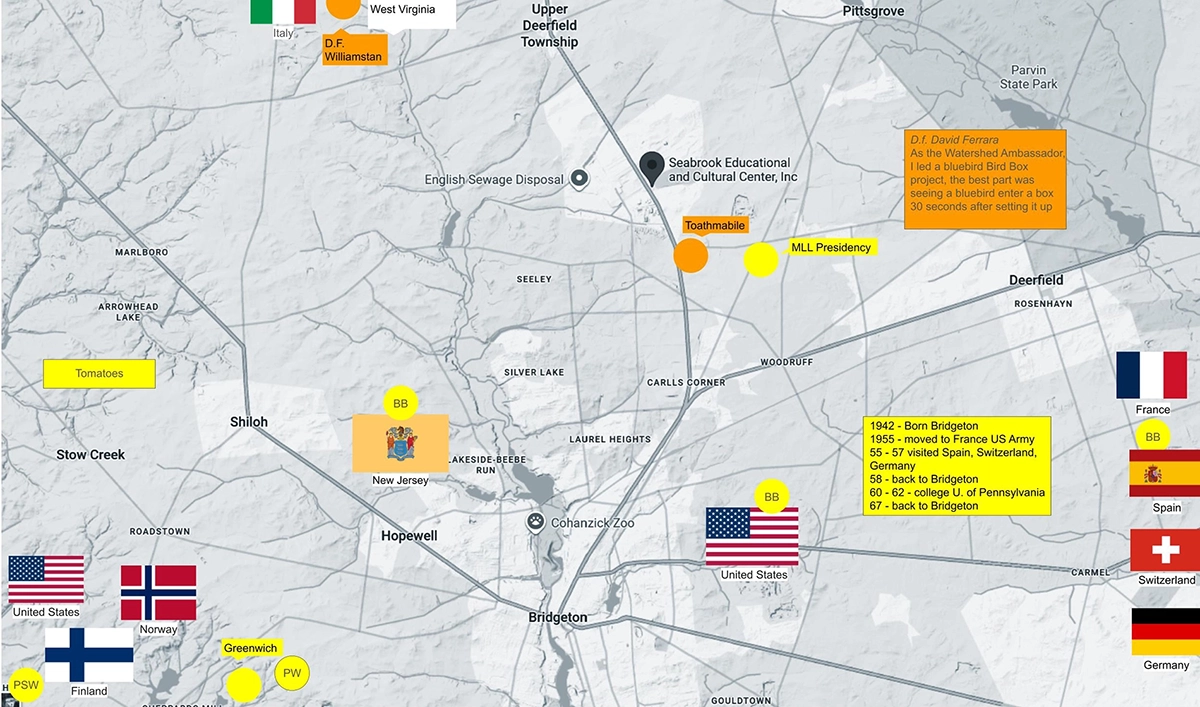
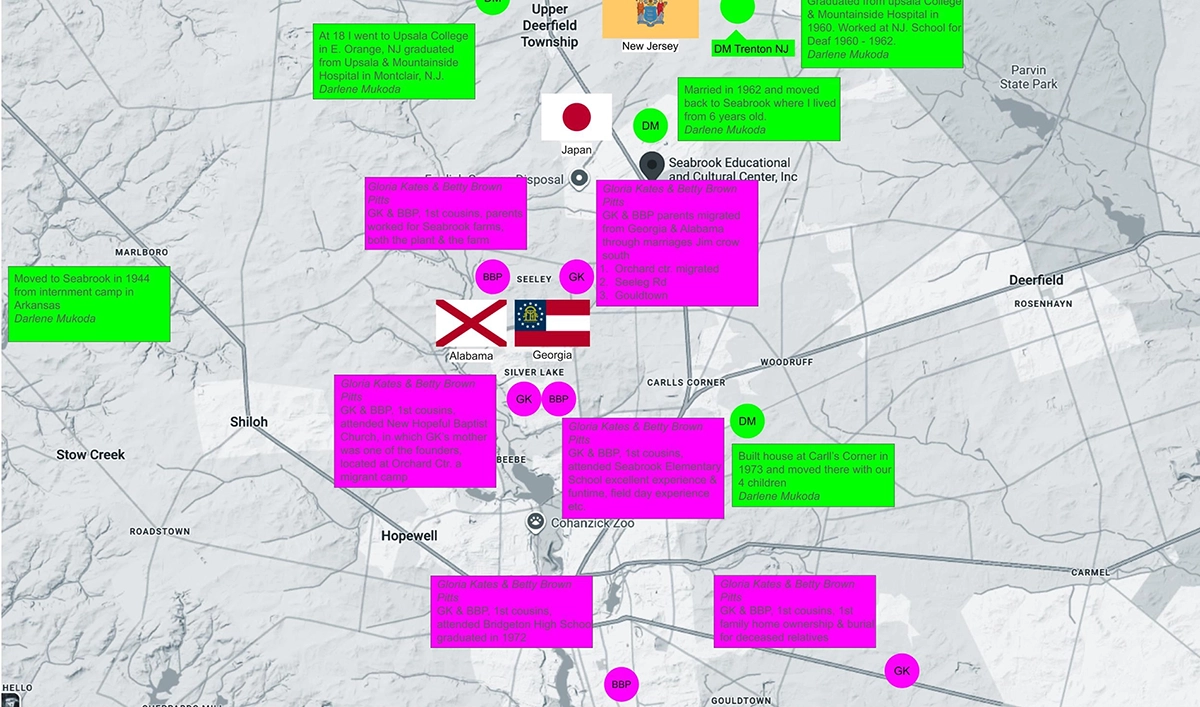
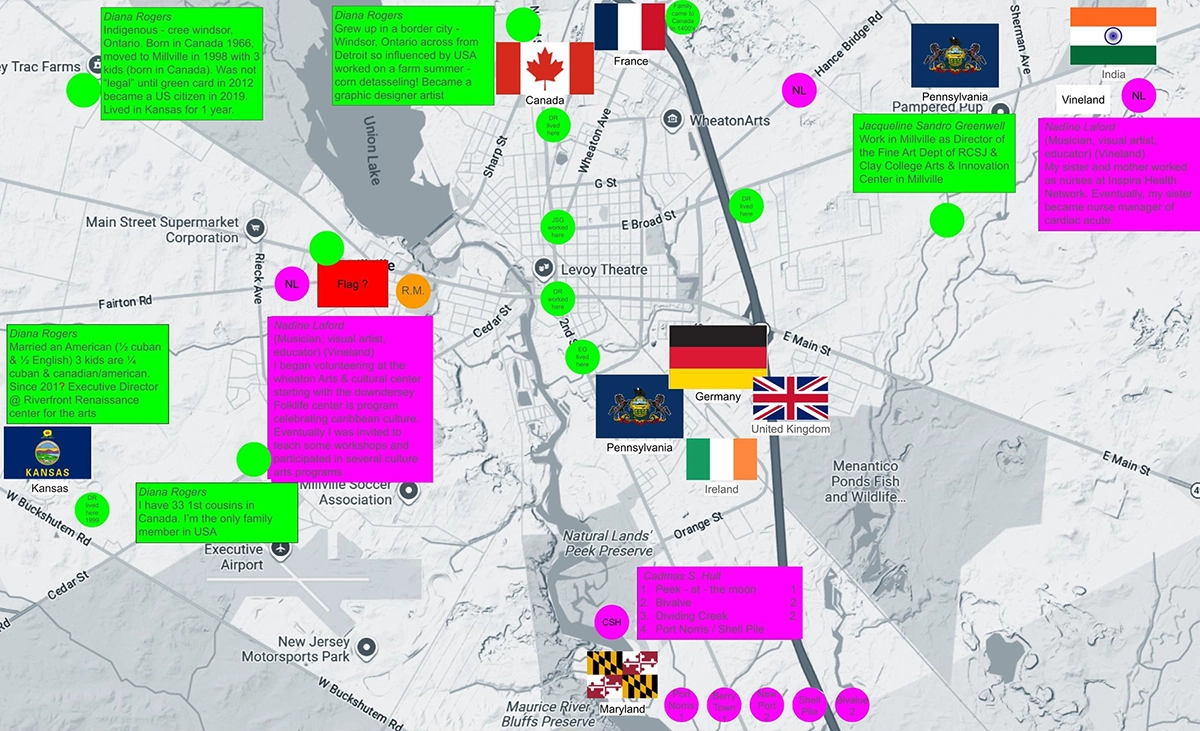
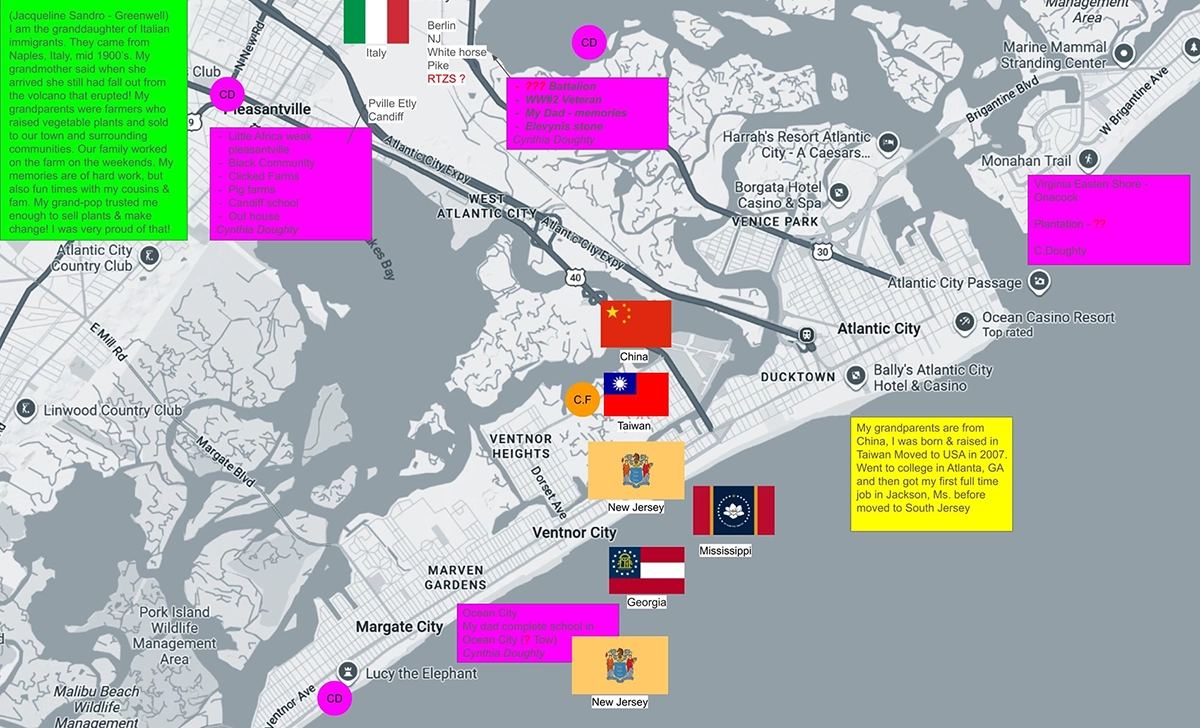
Adorned with legacy flags that stakeholders created at community dialogues, Oni’s Flagship turns a repurposed school bus into a mobile museum, powered by the histories, remembrances, and connections to local places in the region that community members shared in discussions about labor, migration, and immigration.
From the outset, Oni had a unique challenge when tackling, at a conceptual level, what place-based commemoration meant to residents of South Jersey. Oyster farming and processing on the Delaware Bay, the growing and freezing of vegetables at Seabrook Farms, and glassmaking in Millville, took place in mainly rural areas removed from large population centers with central public spaces. Atlantic City, a hub for New Jersey’s shore-based tourism and service economy, is isolated from other parts of South Jersey.
Oni discovered that in the complex, intertwining histories of South Jersey, the themes of travel and transportation surfaced time and again. With this in mind, he “started just thinking about the modes of transportation across South Jersey as both a challenge, and also a sort of a shared experience amongst all the residents, both presently and historically.”
From there came the Sailbus.

Flagship references the experiences of maritime laborers that seeded and harvested oysters on the Delaware Bay, working on the iconic schooners used in the trade. The installation also invokes the buses and trucks that transported thousands of migrant farmworkers to the region every spring and summer, and, on a daily basis, to farflung fields where they would do that day’s picking. Flagship brings whimsy and play to South Jersey’s immigrant and migrant communities, a necessary reclaiming of joy in the midst of sometimes difficult regional histories and experiences.

From conversations about travel and vessels, Oni discovered that community stakeholders consider flags to be important symbols of cultural identity and preservation. Flagship displays flags that Oni created with community members at events throughout the region, and express project stakeholders’ deep sense of place. Titled “legacy flags,” these symbols capture the cultural traditions, lessons, and interpretations of the past that stakeholders want to pass on.
Flagship, in addition to referencing the vessels and vehicles at the front of a migratory fleet, also evokes, as Oni explains, “a flagship of people themselves, meaning the first to come of future generations.
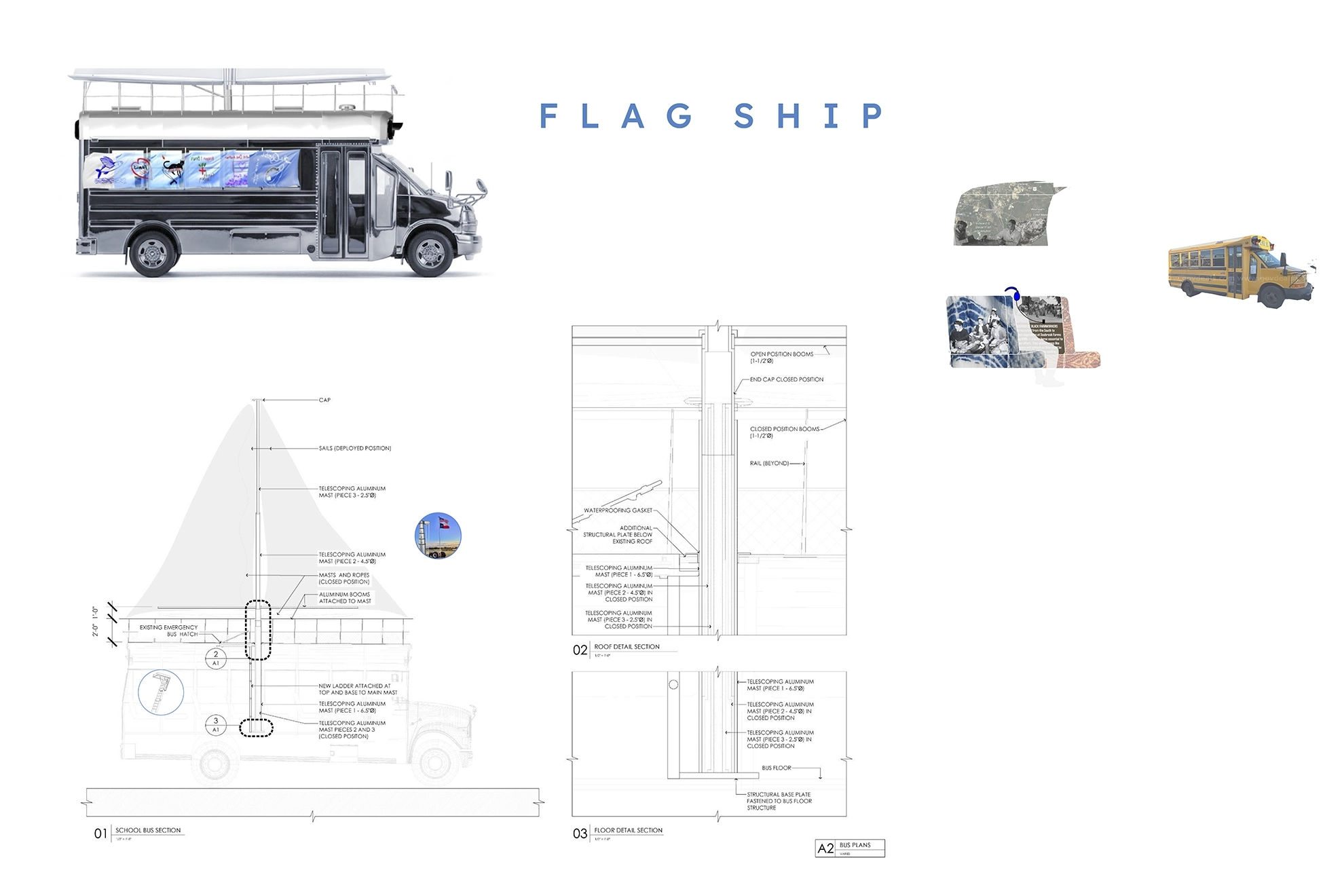
”At Flagship’s foundation is the Sailbus, a former school bus that Oni has converted, through his collaboration with EVO Upfitting, into a work of public art and history capable of traveling across South Jersey and the state. Sailbus features an inflatable mast mechanism and sail that can be raised and flown from the deck (roof) of the bus. Designed by Oni and custom made by Pneuhaus, the sail beckons visitors to the installation.
When collaborating with community stakeholders to design their flags, Oni conducted interviews with stakeholders, where they were given the opportunity to elaborate on how the flags they were creating bear their legacies by describing the symbols they chose to include.. At the Sailbus, audio from these interviews greets visitors activated as they walk around the vehicle. Inside, longer interview segments are available to visitors as video installations mounted on seatbacks. (These videos can also be viewed as part of the Resources tab on this page.)
As Flagship travels to different sites, visitors can help decorate the Sailbus’s interior by adding their own historic images to maps. They’ll place archival images of South Jersey’s histories of migration and labor onto regional maps that line the bus’s ceiling, adding their own layer to the story.
Visitors are invited to share responses into what insights they believe these photographs offer into the state’s past, and what forms of commemoration might emerge from engagement with these histories. When Flagship moves on, ceiling displays will be photographed and featured on the NJMML website, creating a living, interactive archive of the process.
CONCEPT & DESIGN
Flag/Ship was the theme of community design series of engagement, as flags are:
a. Representative of the “first to come”
b. A form of identity and representation from different countries or states
c. Markers on ships and boats, with these communities all tied to migration and water
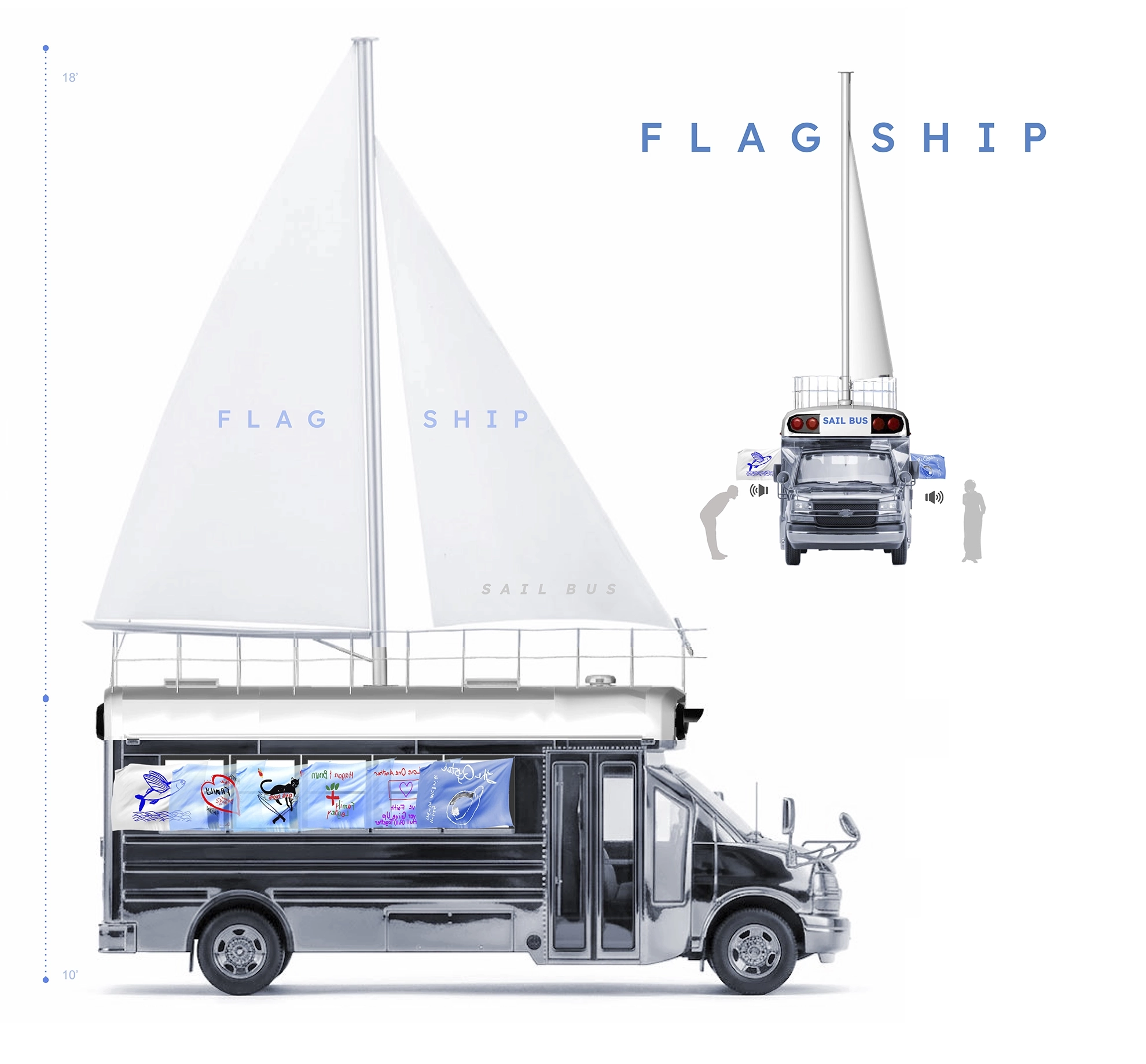
ELEMENT LIST
1. Reflective color bus hull to reflect like glass, the people and surroundings sites.
2. Legacy Flags created by South Jersey residents and descendent communities. Window mounted. Sail when moving bus, and deployed when stationary.
3. Motion sensor speakers activate when people navigate around the bus and hear a wave of stories.
4. Sail deployed when bus stationary and activated at different events; rail rigging.
5. White roof to allow cool top for boarding deck. Hatch to board deck.6. Inflatable mast that collapses when the bus is in motion.





About NJMML
NJ Monuments To Migration And Labor is a three-year initiative honoring immigrants’ contributions to the state. Through public events, and monument installations, it celebrates their resilience, hard work, and cultural impact, blending art, history, and storytelling to inspire reflection and appreciation.